
Russian Foreign Minister Sergei Lavrov stated at a press conference in Antalya on March 10, 2022: “Do we plan to attack other countries? No, we are not planning to. We have not attacked Ukraine either...” and in a June 16, 2022 interview with the BBC he said: “We have not invaded Ukraine. We have declared a special military operation.”
.png)
Mark Beygelzimer, PhD, systems analyst, head of the Trust but Verify project; Victoria Zherdenovska, the editor-in-chief of the Trust but Verify project.
Unlike our other fact-checking studies, in this case we will not evaluate the validity of the statement in the title. It is clear from the outset that this statement is a blatant lie. The invasion of the Russian army into the territory of Ukraine on February 24, 2022 is an obvious and unproven event. It is likely that the rhetoric of the Russian Foreign Minister was prepared even before this date, when Russian leaders planned to take Kiev in three days on the model of the occupation of Crimea in 2014. In this case, it would have been possible not to call it an invasion, since “invasion” implies some kind of resistance by the opposite side. However, it turned out that Ukraine, after all, decided to resist, so the actions of the Russian army on February 24, 2022, for any adequate person are exactly an invasion - an act of military aggression.
The following facts are compiled to reveal the extent of this invasion, the reaction of the civilized world, and the extent of the calamity and human grief caused.
Facts
1. The scale of the invasion and a chronicle of the outbreak of the war
On February 24, 2022, around 6 a.m. Moscow time (5 a.m. Kiev time), almost simultaneously with the end of the broadcast of Russian President Vladimir Putin's address, missile strikes were launched against military infrastructure throughout Ukraine. Russian troops, as well as LPR (Lugansk People's Republic) and DPR (Donetsk People's Republic) troops, crossed the state borders of Ukraine, attacking in the following directions: from the north - Pripyat and Chernihiv (including from the territory of Belarus), from the east - Konotop, Sumy, Kharkiv, Akhtyrka, as well as from the contact line with the LPR and DPR - Stanytsia Luhanska, Volnovakha and Mariupol, from the south (from the side of Crimea) - Kherson, Novaya Kakhovka, and Melitopol [ref][ref] (Fig. 1).
The Russian contingent included hundreds of thousands of soldiers, dozens of aircraft, and hundreds of armored vehicles. In the first hours, more than 150 missiles were fired at Kharkiv, Odessa, Kyiv, Zhytomyr, Brovary, Kherson, Mykolaiv, Dnipro and Zaporizhzhya.
.svg.png)
Figure 1. Map of Russian army invasion of Ukraine on February 24, 2022 (source: Wikimedia)
Copyright: Rr016, CC BY-SA 4.0 <https://creativecommons.org/licenses/by-sa/4.0>, via Wikimedia Commons
.svg)
As a result of the first day, Russian troops took control of Snake Island in the south of Odessa Oblast, Genichesk, Novaya Kakhovka and Volchansk, the Chernobyl nuclear power plant, and went deeper into Sumy and Chernihiv Oblasts [ref]. Russian troops advancing from the territory of Belarus, on February 25, 2022 reached the suburbs of Kiev, from the south - came to Melitopol and Kherson, from the north-east - captured Konotop [ref]. Russian airborne operation near Gostomel ended in failure and defeat of Russian paratroopers [ref].
Groups of executors from the PMC “Wagner” were sent to Kiev with the order to eliminate key figures in the Ukrainian government, including President Zelensky. Despite this, the state leadership decided to remain in the capital and refused to evacuate the country as proposed by the US representatives [ref].
On February 26-27, Russian troops occupied Melitopol, Berdyansk, Vorzel, Bucha, Gostomel and Kupyansk. They also broke through to the streets of Kharkiv, but were pushed back by the Ukrainian Armed Forces. On February 28, the Russians completely blocked Mariupol. On March 1, the Russian Armed Forces entered Kherson, where they engaged in a battle with the local Territorial Defense, as well as occupied Trostyanets, attempted to storm Sumy and besieged Chernihiv. On March 3, the Russian army broke through into northern Luhansk Oblast, occupying Starobelsk, and also captured Energodar in Zaporizhzhya Oblast [ref]. On March 4, Russian forces seized the Zaporizhzhya nuclear power plant [ref] and Balakleya [ref].
In parallel with the land offensive, Russian forces attempting to suppress the Ukrainian air defense system continued to strike with ground-based ballistic missiles (including Iskander family systems), cruise missiles (including X-101) from Tu-95 and Tu-160 aircraft from Russian and Belarusian airspace, as well as sea-based carriers from the Black Sea. However, Ukrainian air defenses stood firm, deterring Russian aircraft from flying over much of the Ukrainian-controlled territory. Russia launched more than 1,100 missiles at Ukrainian targets in the first 21 days of the war and a total of 2,125 missiles in the first 68 days of the war [ref].
By early March, the town of Volnovakha was almost completely destroyed; on March 12, it was occupied by Russian troops [ref]. On March 15, the Russian Defense Ministry announced the seizure of the entire territory of the Kherson region [ref]. On March 19, the town of Snigiryovka in the Nikolaev region was occupied [ref].
By the second half of March, the advance of Russian forces had stalled - the offensive on Kyiv and Mykolaiv had practically stopped, Kharkiv and Mariupol, which had been subjected to continuous shelling, had also not been taken, and Russian forces had been unable to establish control over Ukrainian airspace [ref]. The initial goal of the Russian troops was to quickly capture Kiev, Kharkov and a number of other major Ukrainian cities. This goal was not achieved [ref][ref].
By March 25, Russian forces had been pushed back from Kiev and were in danger of being encircled by the AFU. They also made no progress in the offensive on Kharkiv, and Ukrainian forces launched a counteroffensive on Kherson [ref][ref][ref]. The Russian government has decided to abandon the siege of Kiev, moving the bulk of its troops to the Kharkiv and Donbass area [ref]. On March 27, the Ukrainian side announced a shift to tactical counter-offensives in Sumy, Kharkiv, Kyiv and Kherson regions [ref]. In the first half of April, Ukrainian troops in the northern direction completely liberated Kyiv, Zhytomyr, Chernihiv and Sumy regions [ref].
.jpg) Vitaly Stutman superimposed a map of Mariupol with the destruction on a map of Moscow to show the scale of the city's neighborhoods destroyed by Russian shelling. Source - Radio Svoboda
Vitaly Stutman superimposed a map of Mariupol with the destruction on a map of Moscow to show the scale of the city's neighborhoods destroyed by Russian shelling. Source - Radio Svoboda
At the peak of its advance - in March 2022 - Russia occupied about 100 thousand km2, which was 18% of the territory controlled by Ukraine at the beginning of the invasion on February 24, 2022 (as of August 2024, the occupied area was reduced to about 70 thousand km2 due to the return of part of the territory by Ukrainian troops; we estimated based on data from the Deep State project).
2. International response
Russia's invasion of Ukraine was condemned:
States
• Albania [ref]
• Australia [ref]
• Canada [ref]
• Croatia [ref]
• Czech Republic [ref]
• Estonia [ref]
• France [ref]
• Georgia [ref]
• Germany [ref]
• Greece [ref]
• Indonesia [ref]
• Israel [ref]
• Italy [ref]
• Japan [ref]
• Latvia [ref]
• Lebanon [ref]
• Lithuania [ref]
• Moldova [ref]
• Nepal [ref]
• Norway [ref]
• Philippines [ref]
• Poland [ref]
• Qatar [ref]
• Saudi Arabia [ref]
• Singapore [ref]
• South Korea [ref]
• Spain [ref]
• Switzerland [ref]
• Taiwan [ref]
• Turkey [ref]
• United Kingdom [ref]
• United States [ref]
• and many others [ref]
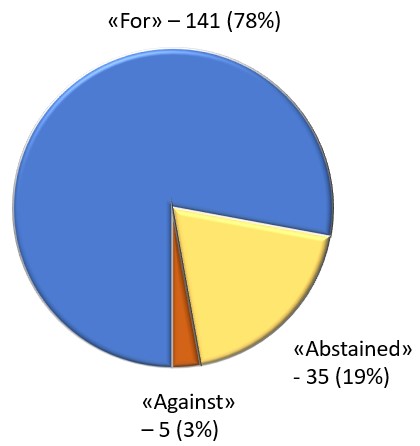
Figure 2. Chart of voting results of UN General Assembly Resolution ES-11/1 of March 2, 2022
(condemning Russia's invasion of Ukraine, demanding the complete withdrawal of Russian troops,
reversal of the decision to recognize the self-proclaimed Donetsk and Lugansk People's Republics)
The UN General Assembly has passed four resolutions since February 24, 2022, directly condemning Russia's invasion of Ukraine and demanding the withdrawal of all Russian troops from Ukraine:
ES-11/1 of March 2, 2022 (vote: 141 countries in favor, 35 abstained, 5 against) [ref] — see Figure 2
ES-11/2 of March 24, 2022 (“For” - 140, “Abstained” - 38, “Against” - 5) [ref]
ES-11/4 of October 12, 2022 (“For” - 143 countries, “Abstained” - 35, “Against” - 5) [ref]
ES-11/6 of February 23, 2023 (“For” - 141 countries, “Abstained” - 32, “Against” - 7) [ref]
Intergovernmental and international organizations
• United Nations [ref] [ref]
• UNESCO [ref]
• UN International Court of Justice [ref]
• International Criminal Court [ref] (issued an arrest warrant for Russian President Vladimir Putin)
• NATO [ref]
• European Union [ref]
• Council of Europe [ref]
• OSCE [ref]
• African Union [ref]
• Baltic Assembly [ref]
• Caribbean Community [ref]
• Nordic Council [ref]
• OAS (Organization of American States) [ref]
• OECD (Organization for Economic Cooperation and Development) [ref][ref]
• Amnesty International [ref]
• Memorial [ref]
• Reporters Without Borders [ref]
Sports organizations
• International Olympic Committee [ref]
• International Paralympic Committee [ref]
• International federations and associations for 27 sports, including soccer, hockey, athletics, basketball, tennis, cycling and boxing [ref]
Scientists
• Nobel laureates (206 laureates signed the open letter to Putin, and many made separate statements; in total, more than 70% of all living Nobel laureates have publicly condemned Russia's invasion) [ref], [ref], [ref]
• Russian scientists (open letter to Putin signed by almost 7,000 people) [ref]
• Mathematical scientists (an open letter to Putin signed by more than 500 people) [ref].
• Employees, students and graduates of the Moscow Institute of Physics and Technology (the open letter to Putin was signed by 2,592 people) [ref]
• Staff, students, graduate students and alumni of the Russian State University for the Humanities (the open letter was signed by 870 people) [ref]
• Employees, students and alumni of Petrozavodsk State University (764 people signed the open letter) [ref]
• Community of academic economists (open letter “No to War!” signed by 364 people) [ref]
• Scientists anthropologists (petition signed by 1,049 people) [ref]
• Russian geographers (the open letter was signed by more than 1800 people) [ref]
• European Association of Archaeologists [ref]
Cultural institutions
• Cultural heritage organization Europa Nostra [ref]
• European Union National Institutes for Culture [ref]
• Network of European museum organizations [ref]
• Royal Opera House in London [ref]
• Czech Philharmonic [ref]
• Chicago Symphony Orchestra [ref]
• Berlin Philharmonic Orchestra [ref][ref]
• Munich Philharmonic [ref][ref]
• Bavarian State opera [ref]
• Metropolitan Opera [ref]
• Carnegie Hall [ref]
• Vienna Philharmonic Orchestra [ref]
• Rotterdam Philharmonic Orchestra [ref]
• La Scala [ref][ref]
Religious organizations and heads of denominations
• Pope Francis [ref]
• Ecumenical Patriarch Bartholomew I [ref]
• Dalai Lama XIV, the spiritual leader of Tibetan Buddhism [ref]
• Grand Imam of Al-Azhar Ahmed el-Tayeb [ref]
• Orthodox Church of Ukraine (OCU) [ref]
• Ukrainian Orthodox Church of the Moscow Patriarchate (UOC MP) [ref] [ref]
• Latvian Orthodox Church [ref]
• Vilna and Lithuanian Diocese of the Russian Orthodox Church [ref]
• Ukrainian Greek Catholic Church (UGCC) [ref]
• Council of Bishops' Conferences of Europe (COMECE) [ref]
• Polish Bishops' Conference[ref]
• Community of Protestant Churches in Europe (CPCE) [ref]
• World Council of Churches (WCC) [ref]
3. Photo testimonials
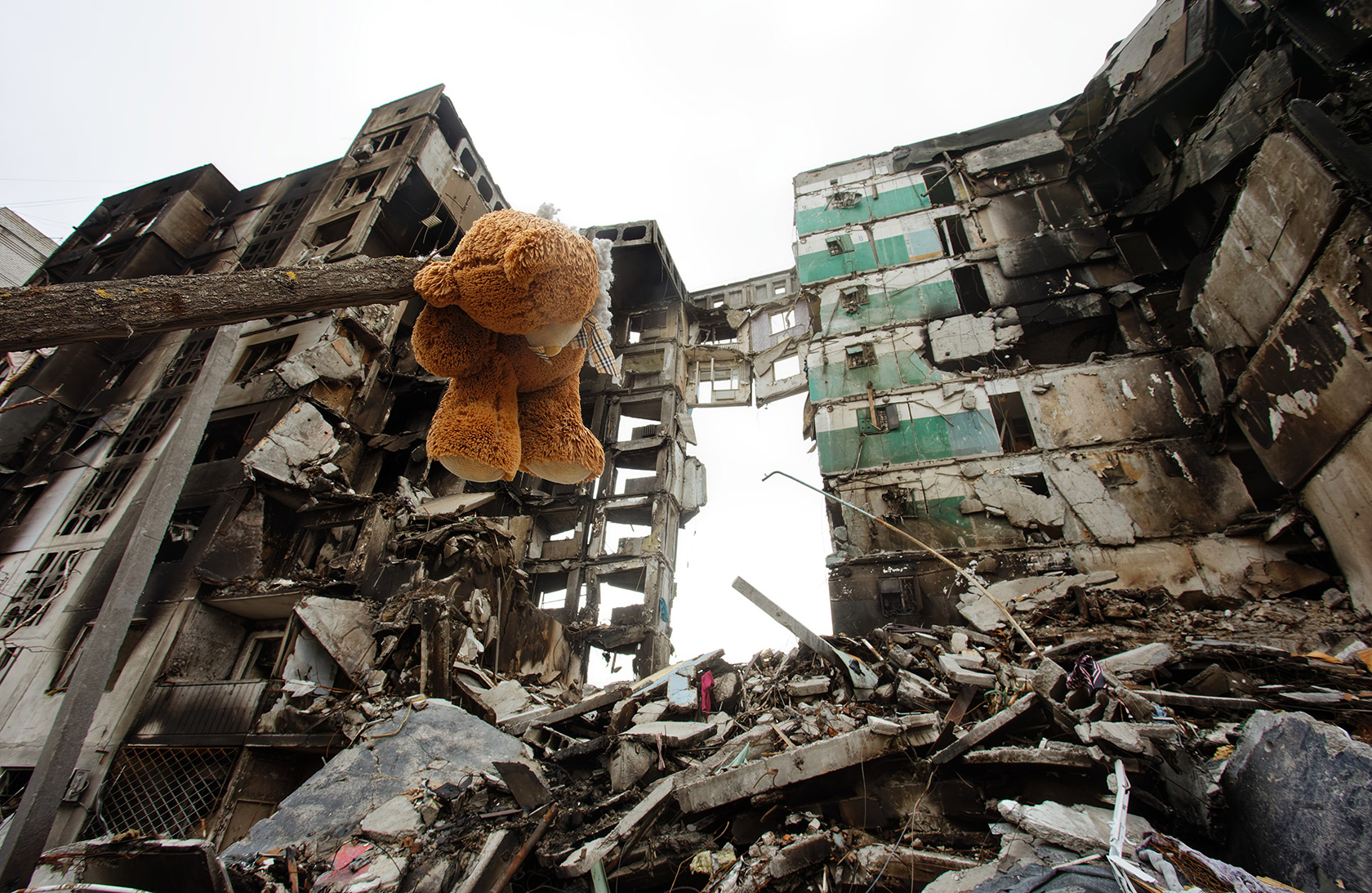 A toy bear cub against the background of a house destroyed by an airstrike in Borodyanka, Kiev region, April 2022.
Photo source: Ukrainska pravda

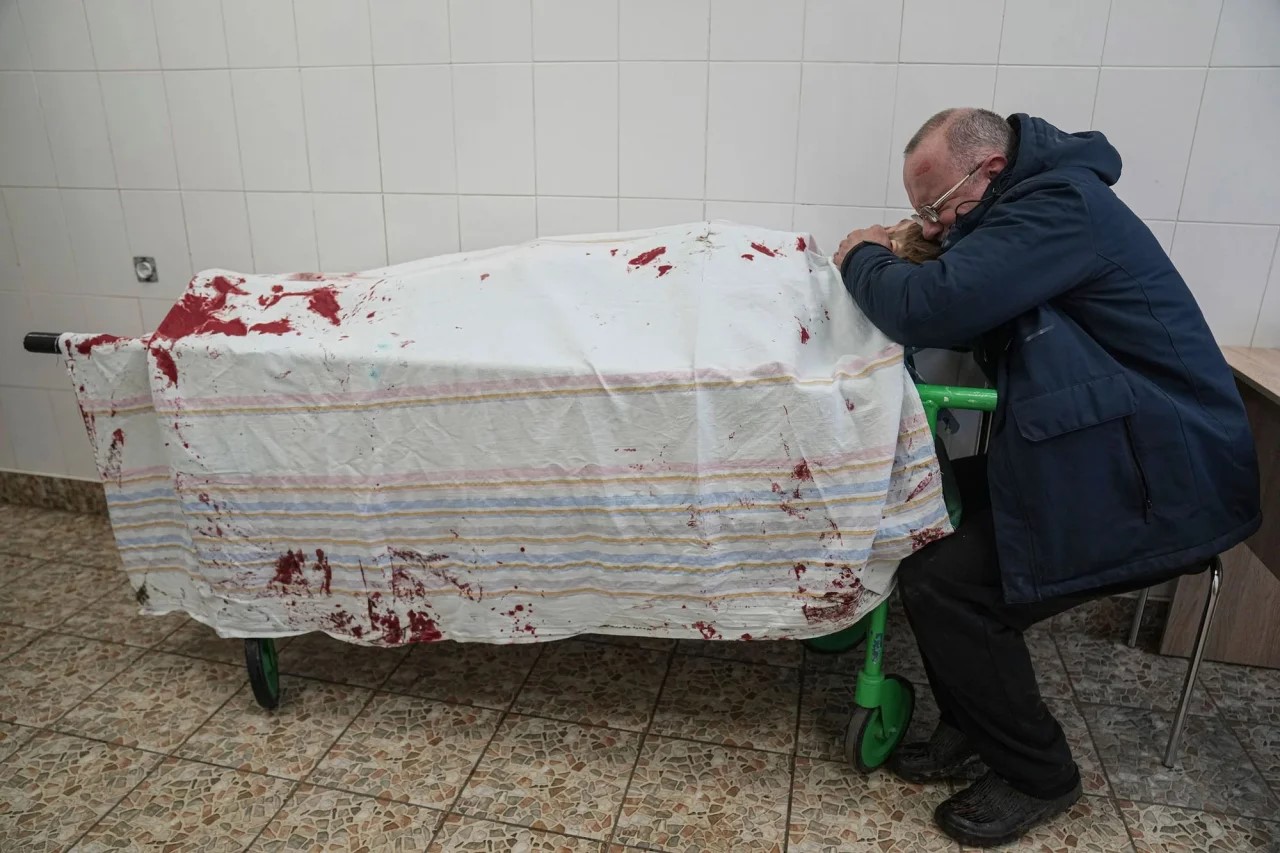 Sergiy, father of teenager Ilya, cries over the dead body of his son lying on a stretcher in a maternity hospital converted into a medical ward in Mariupol on March 2, 2022 / Photo: @Evgeniy Maloletka-AP, source: NV
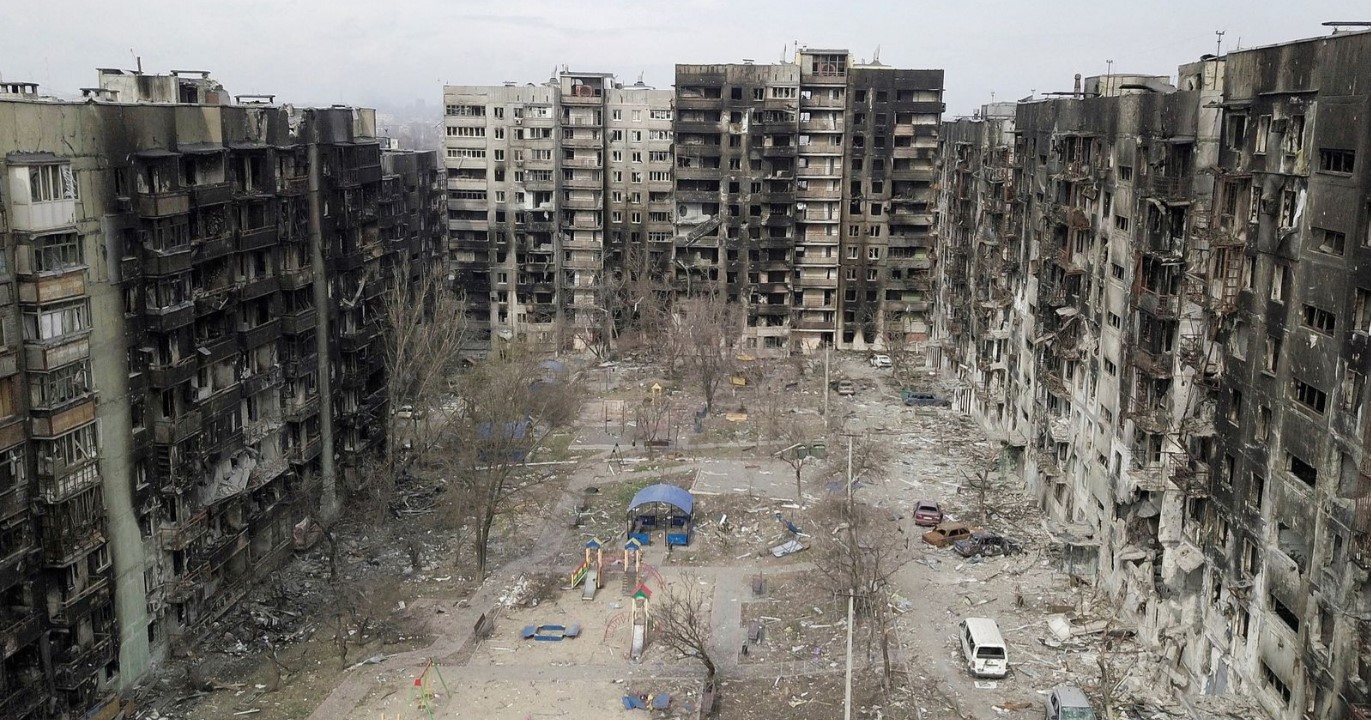
A residential neighborhood in Mariupol completely destroyed by Russian airstrikes, April 3, 2022. Photo: Reuters, photo source: Novinarnya
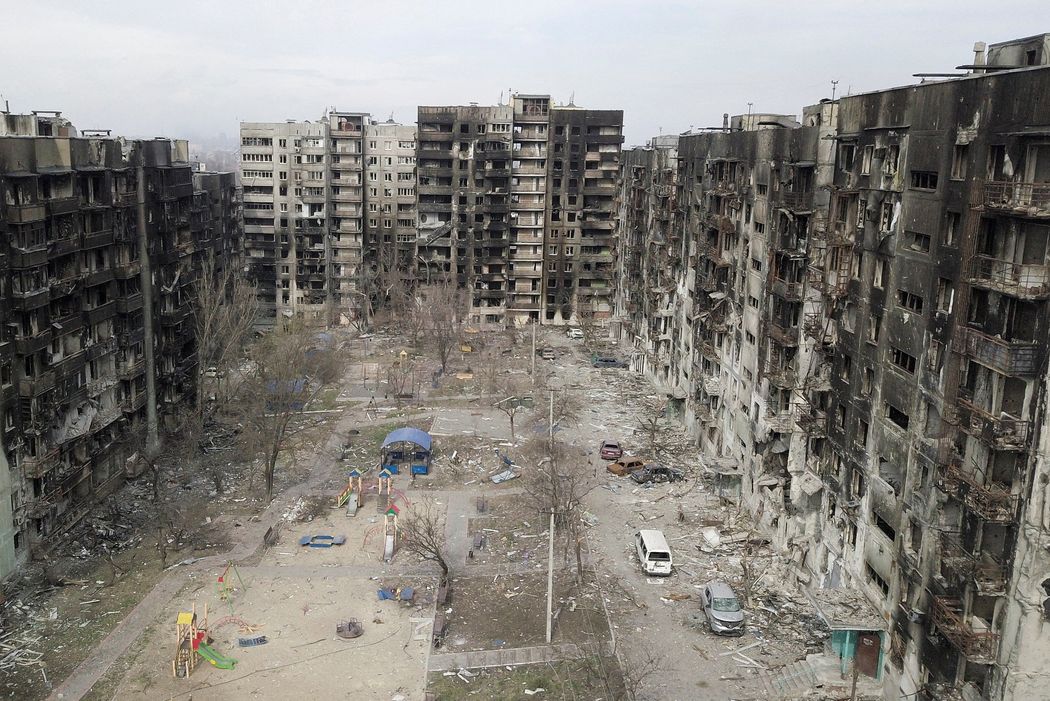
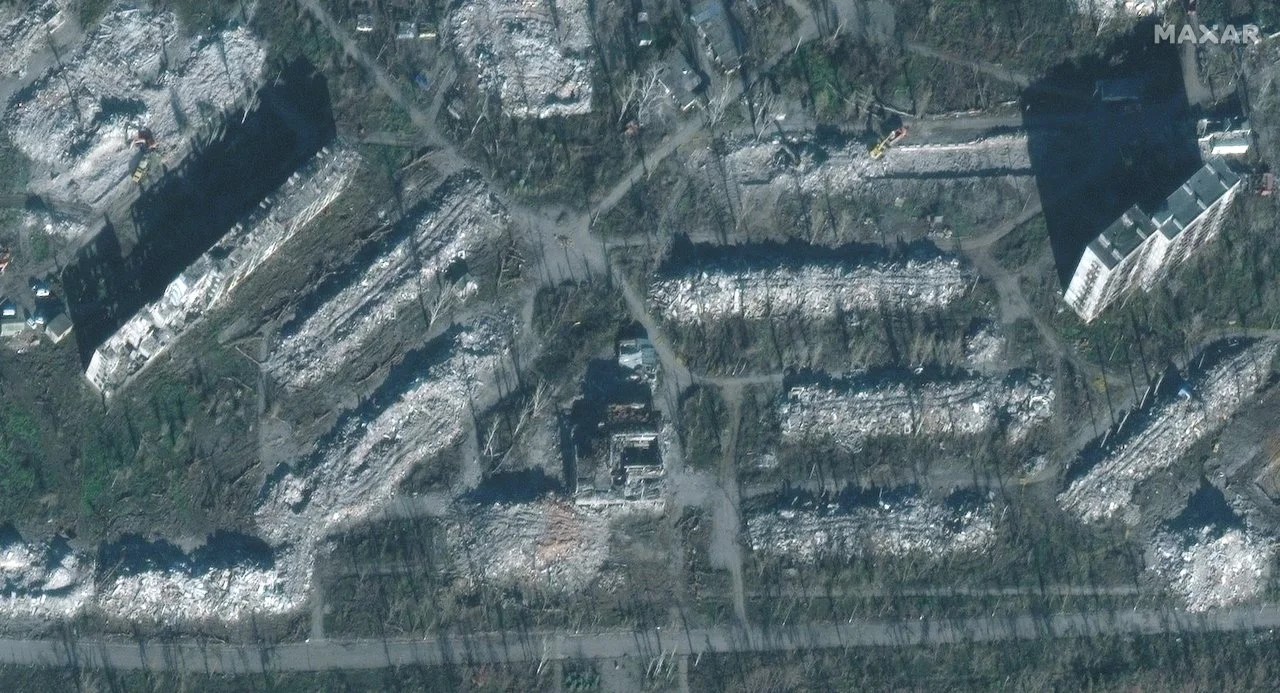 A satellite image shows destroyed high-rise buildings in the east of Mariupol. November 30, 2022.
Photo: Maxar Technologies/Handout via REUTERS. Source: NV

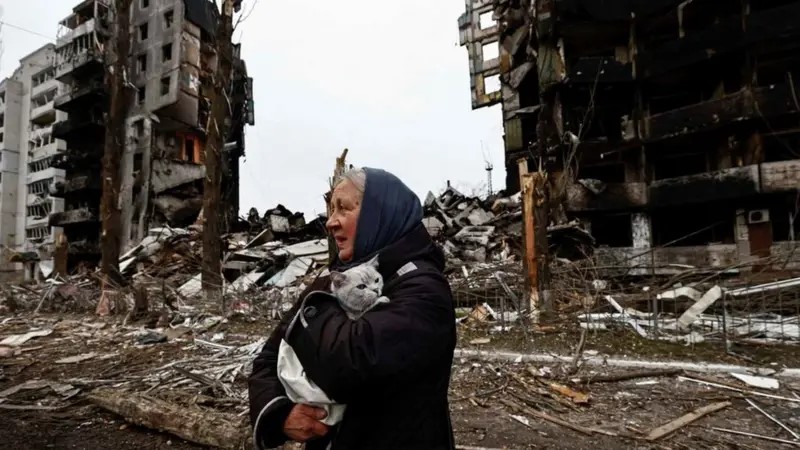 This is what Borodyanka, Kiev region, looked like on April 5, 2022. Photo: AFP, photo source: BBC
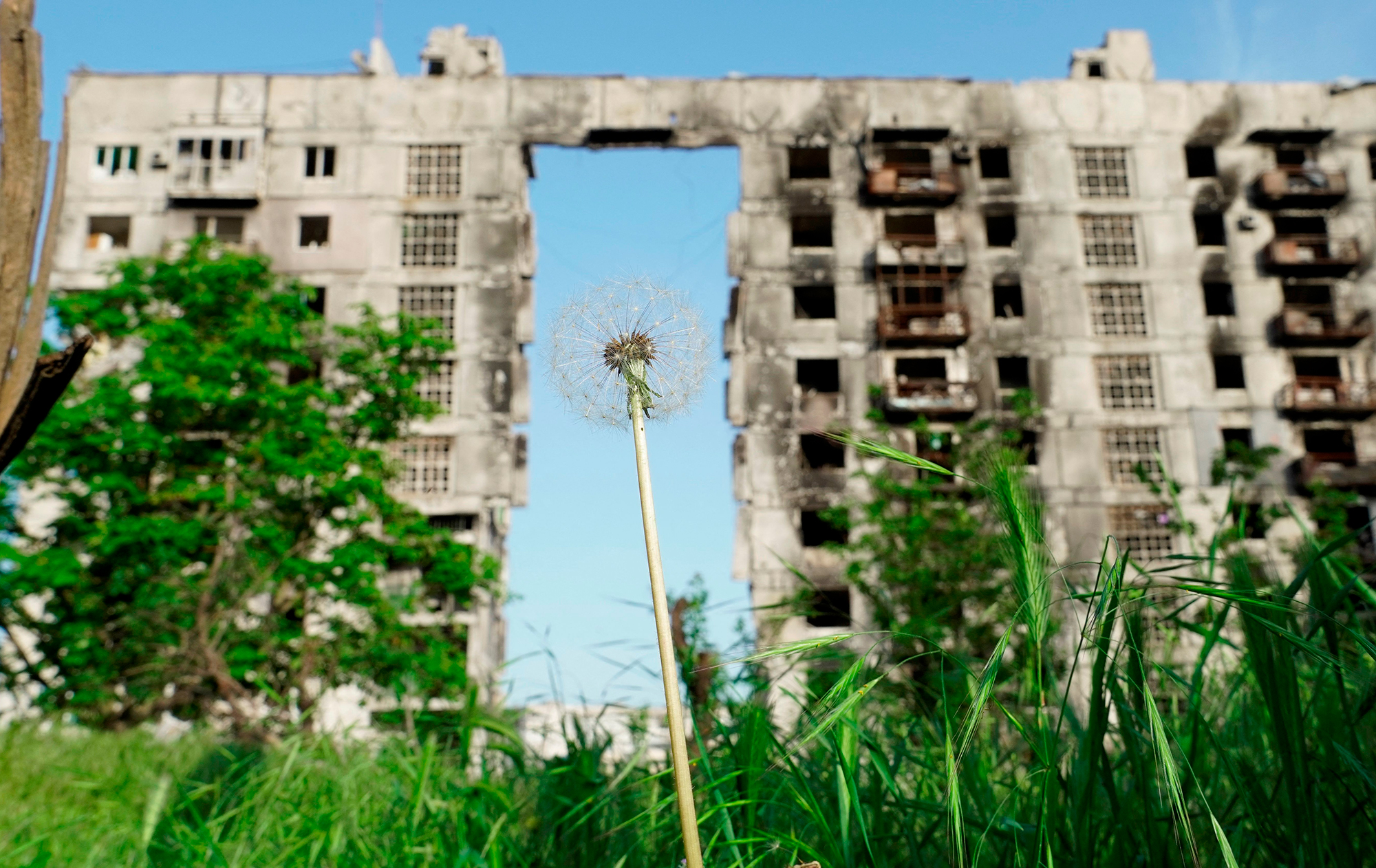 A destroyed apartment building in Mariupol, May 2022. Photo: Lehtikuva / AFP / Stringer via GettyImages, photo source: Hufvudstadsbladet

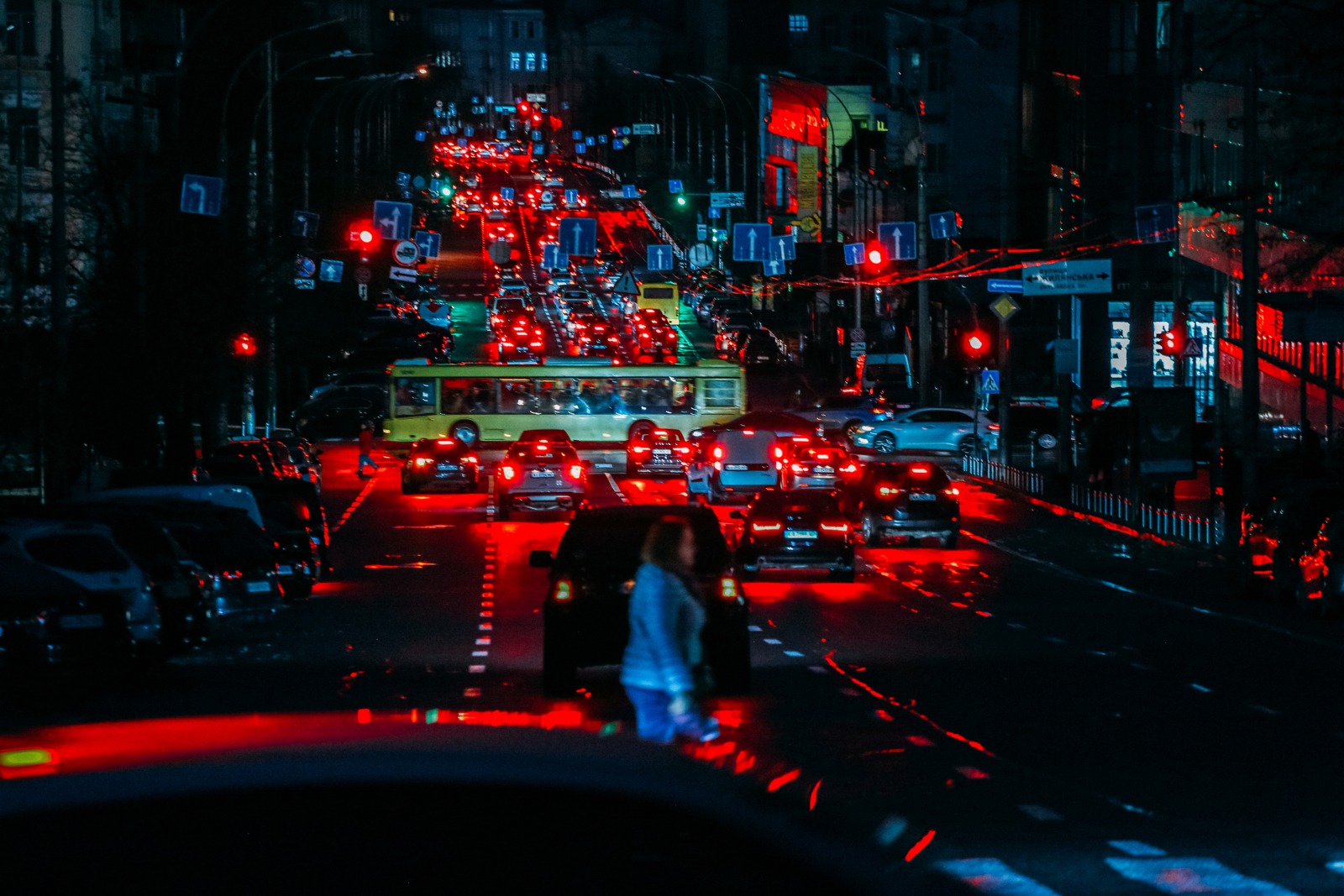
Evening Kiev during a blackout on November 27, 2022. Photo: Serhiy Rystenko, source: Ukrainska pravda

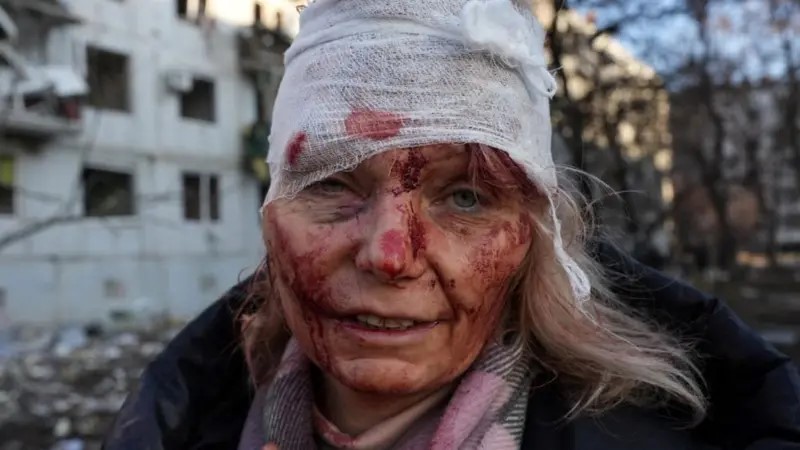
A resident of Chuguev who suffered Russian shelling on the day of the invasion on February 24, 2022. Photo: GettyImages, source: BBC
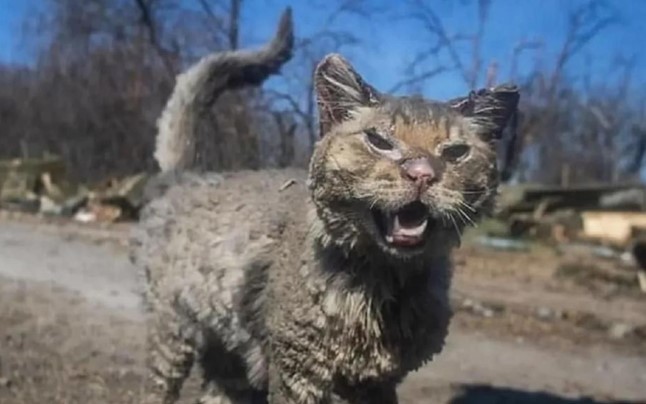
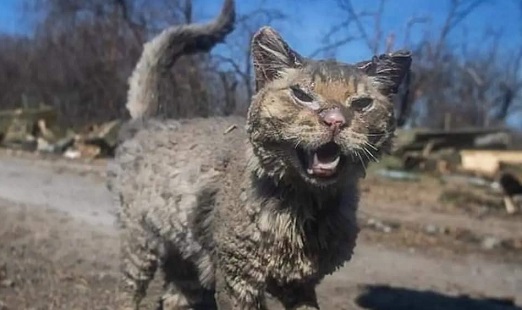
A burned but surviving cat from the village of Andreevka near Kiev, early April 2022. Photo: Kyiv24.news
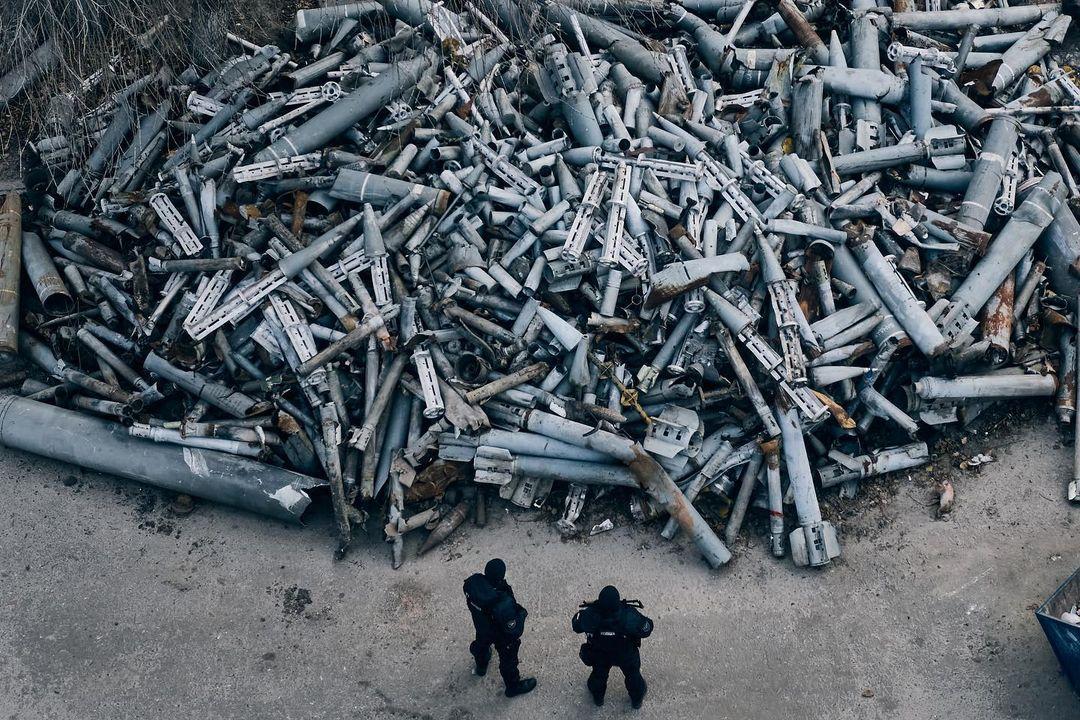
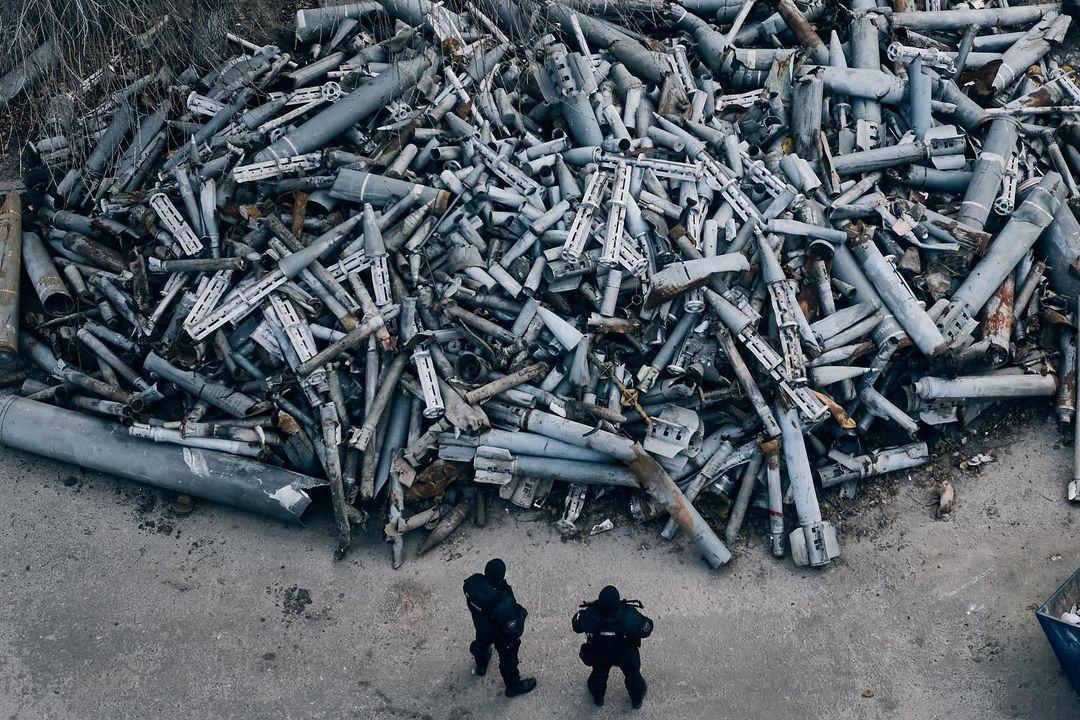
“Graveyard” of Russian Federation shells in Kharkiv (December 2022). Photo: instagram.com/libkos, photo source: Unian
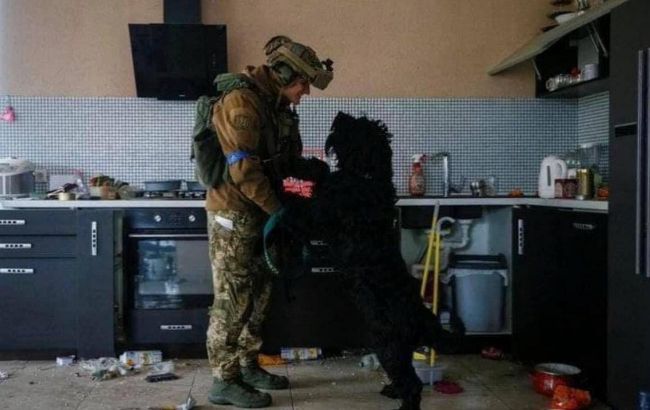
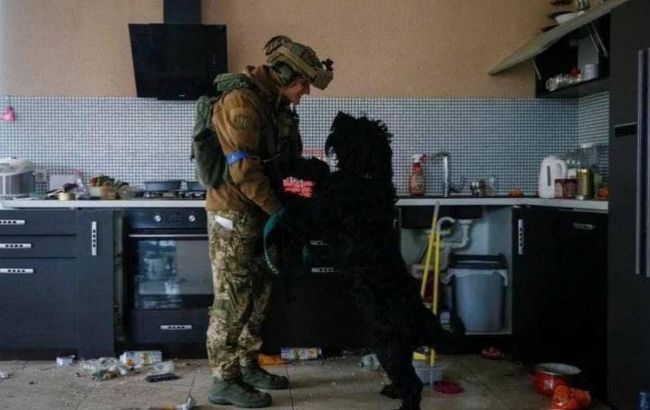
A black dog joyfully greets the Ukrainian military, who found him in a closed apartment in ruined Irpen,
March 29, 2022. Photo: Gleb Garanich (facebook.com/gleb.garanich), source: RBC-Ukraine
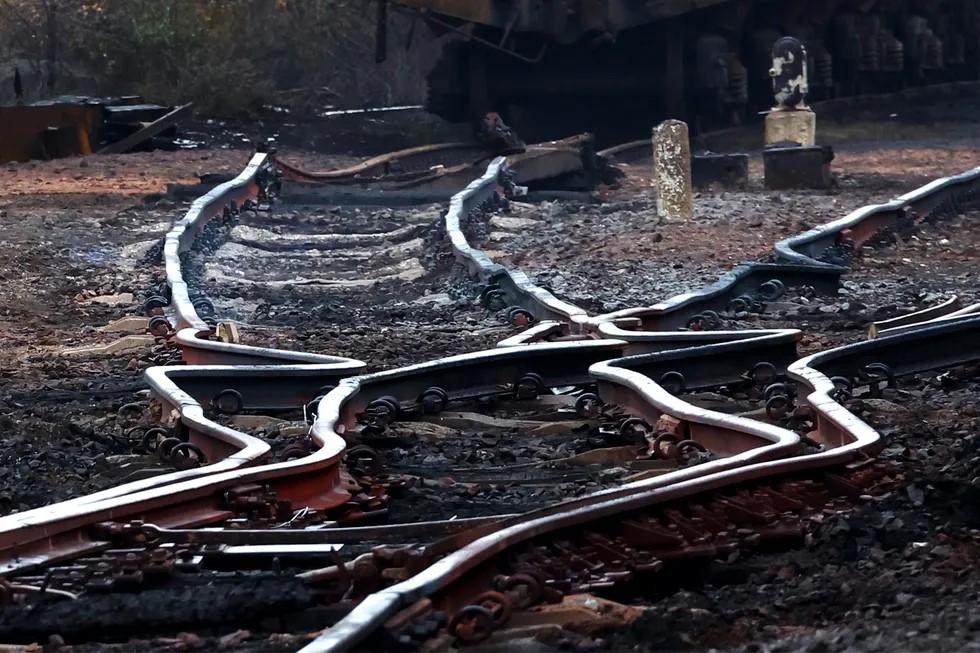
Molten rails of Shakhtersk railway station after shelling on October 26, 2022. Photo: Valery Sharifulin / TASS, source: Meduza
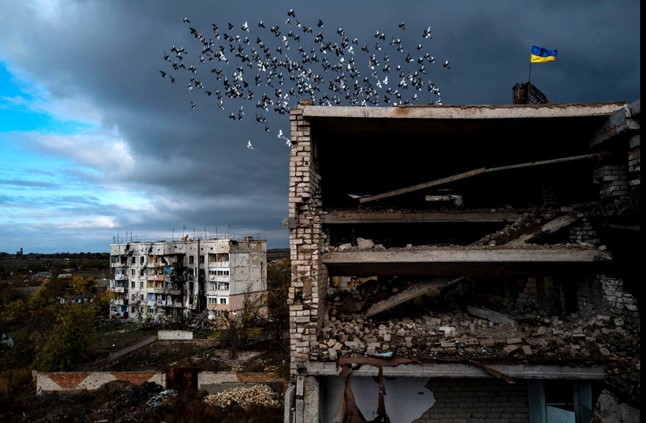
The village of Arkhangelskoye in the Kherson region liberated by Ukrainian troops, October 2022. Photo: Wolfgang Schwan/AA/picture alliance, source: DW

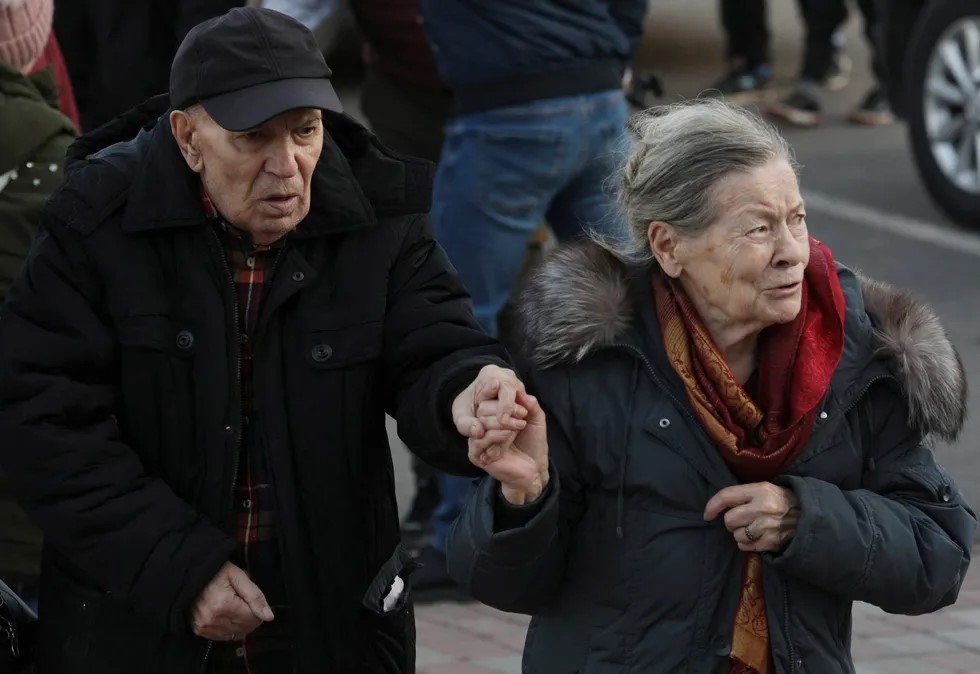
Residents of Kherson, fleeing the war. Photo: Alexey Pavlishak / Reuters / Scanpix / LETA, source: Meduza

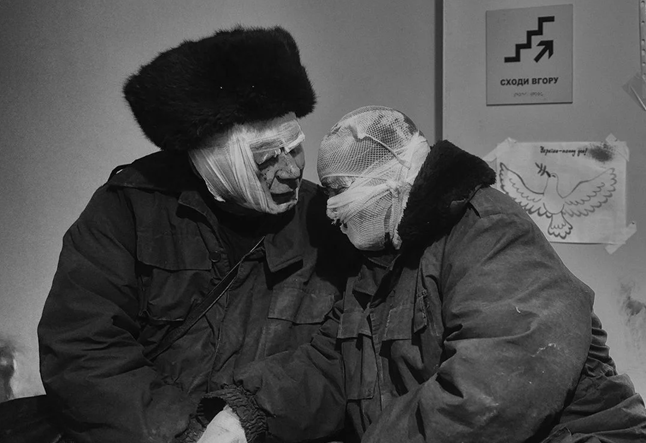
An elderly couple from Bakhmut comfort each other at a clinic after a Russian missile destroyed their home,
November 17, 2022. Photo: Eddy van Wessel, source: Antikor

Verdict
 The statements by Russian Foreign Minister Sergey Lavrov that Russia did not invade Ukraine are a completely obvious lie. Such statements are tantamount to saying that “Germany did not invade the USSR in 1941”.
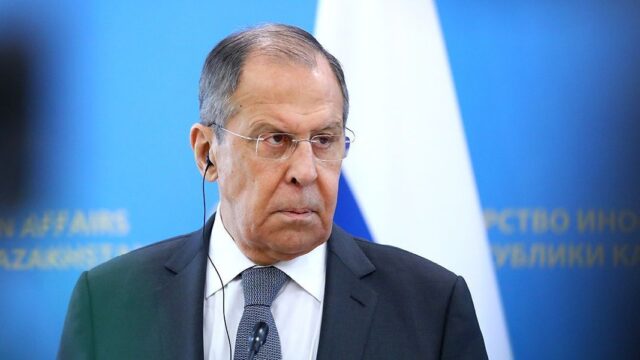
Cover photo — Sergey Lavrov, copyright: Russian Foreign Ministry Press Service / TASS, source: RTVI
.png) Dear reader, We invite you to share your opinion about this article and the Trust but Verify project in general through available communication channels. We will take your opinion into account when selecting content and verifying information. If your arguments are convincing, we are ready to make adjustments in evaluating statements, facts and conclusions
Dear reader, We invite you to share your opinion about this article and the Trust but Verify project in general through available communication channels. We will take your opinion into account when selecting content and verifying information. If your arguments are convincing, we are ready to make adjustments in evaluating statements, facts and conclusions