
These books, published at the end of the nineteenth century, explained the mechanisms that allowed the tyrants of the past to seize power and became the “textbook” for the dictators of the twentieth and twenty-first centuries. They show how ordinary people can easily be used to create a mindless mob ready to kill other people for no rational reason.
.png)
Post Editor: Mark Beygelzimer, PhD, systems analyst, head of the Trust but Verify project.
Reference: Gustave Lebon (May 7, 1841 - December 13, 1931) was a French social psychologist and sociologist. He is known for his research in the field of “crowd psychology”. His main books are The Psychology of peoples (1894) and The Psychology of crowds (1895). These works by Lebon became the basis for many PR-technologies and techniques of manipulation of mass consciousness.
Excerpts from the books
(The psychology of peoples by Gustave Le Bon. Andesite Press, 2017, 264 p. Psychology of crowds by Gustave Le Bon. Sparkling Books Ltd, 2022, 248 p. Highlights in the text are made by the editor)
1 ***
… The greatness of nations depends primarily on their level of morality.
2 ***
The crowd has never sought the truth; it turns away from evidence that does not please it and prefers to worship error if error seduces it. Whoever can deceive the crowd easily becomes its master; whoever tries to enlighten it is always its victim.
3 ***
The masses are never convinced by arguments, but only by assertions, and the authority of these assertions depends on the charm of the person who makes them.
4 ***
The masses respect only strength, and kindness moves them little, as they see it as a form of weakness. The sympathies of the crowd have always been on the side of tyrants who subjugate them, not on the side of kind rulers... If the crowd willingly tramples a fallen despot underfoot, it is only because, having lost his power, the despot falls into the category of the weak.
5 ***
By becoming part of an organized crowd, a person descends several rungs on the ladder of civilization. In isolation, he might have been a cultured individual; in the crowd, he is a barbarian, that is, a creature acting on instinct.
6 ***
In a crowd, only stupidity can accumulate, not intelligence.
7 ***
… He who cannot control himself is condemned soon to fall under the control of others.
8 ***
In the soul of the crowd, the desire for freedom is not dominant, but the need for submission; the crowd so craves obedience that it instinctively submits to whoever declares himself its master.
9 ***
Critical thinking is the highest, very rare quality, while the imitative mind is a very common ability: the vast majority of people accept without criticism all established ideas delivered to them by public opinion and education.
10 ***
A convinced person, dominated by an idea, whether religious or otherwise, is impervious to reasoning, no matter how sound it may be.
11 ***
… An individual in a crowd acquires a sense of invincible power, and this sense allows him to yield to instincts that he would never give in to when alone. In the crowd, he is less inclined to restrain these instincts because the crowd is anonymous and does not bear responsibility.
1 ***
… The greatness of nations depends primarily on their level of morality.
.png) Editor's Comment
Editor's Comment
It is not by chance that we repeat the first quotation at the end. In Lebon's books it is lost behind numerous descriptions of various aspects of the psychology of the masses, which leave an impression of hopelessness: they say that dictators, relying on the masses, which are easy to manipulate, have always been, are and will be, and nothing can be done about it. But Lebon suggests a way out of this situation: each person can retain his individuality and not fall under the influence of the crowd, if he assesses the morality of his actions. And for this he must have a critical mind (see quote 9).
At the end of the article we offer a selection of illustrations demonstrating how, by manipulating mass consciousness, dictators turn people into a rabid mob, and what inhuman consequences this leads to.
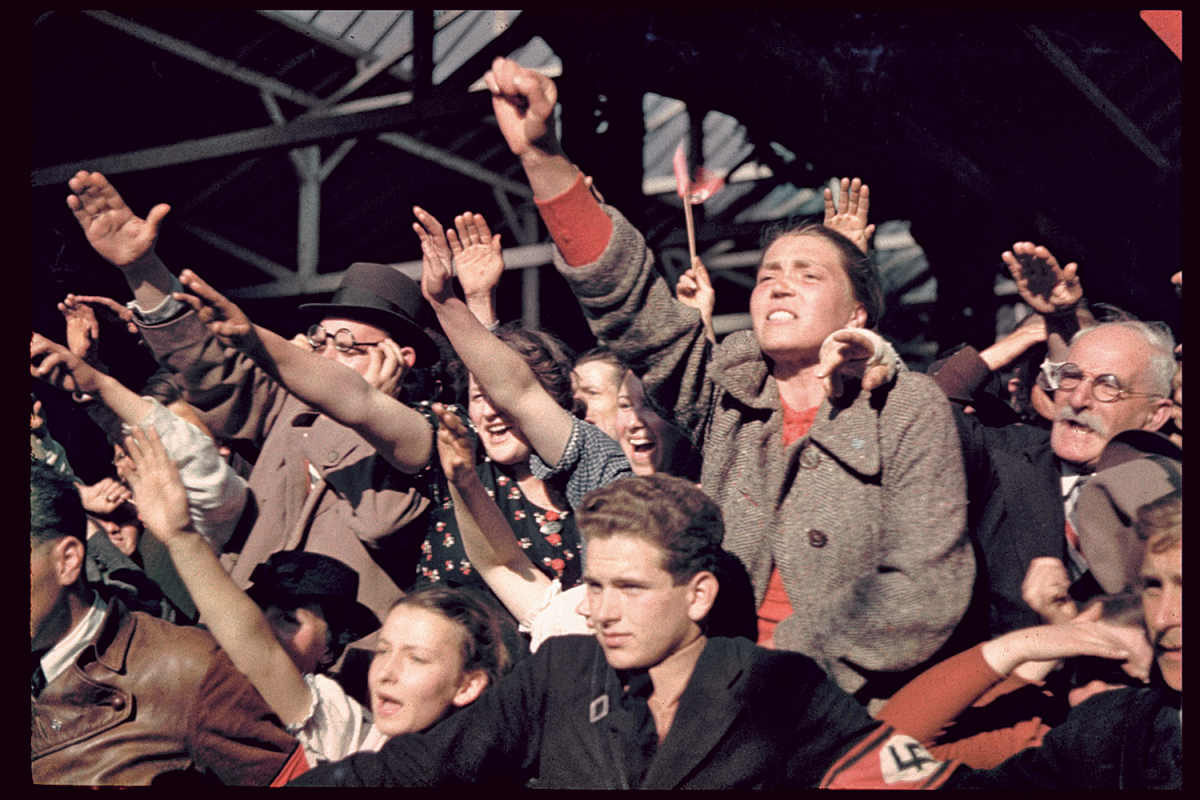
1938. Happy Austrians greet Adolf Hitler during the campaign for the Anschluss, the annexation of Austria to Germany. Photo by Hugo Yeager, source: Livejournal
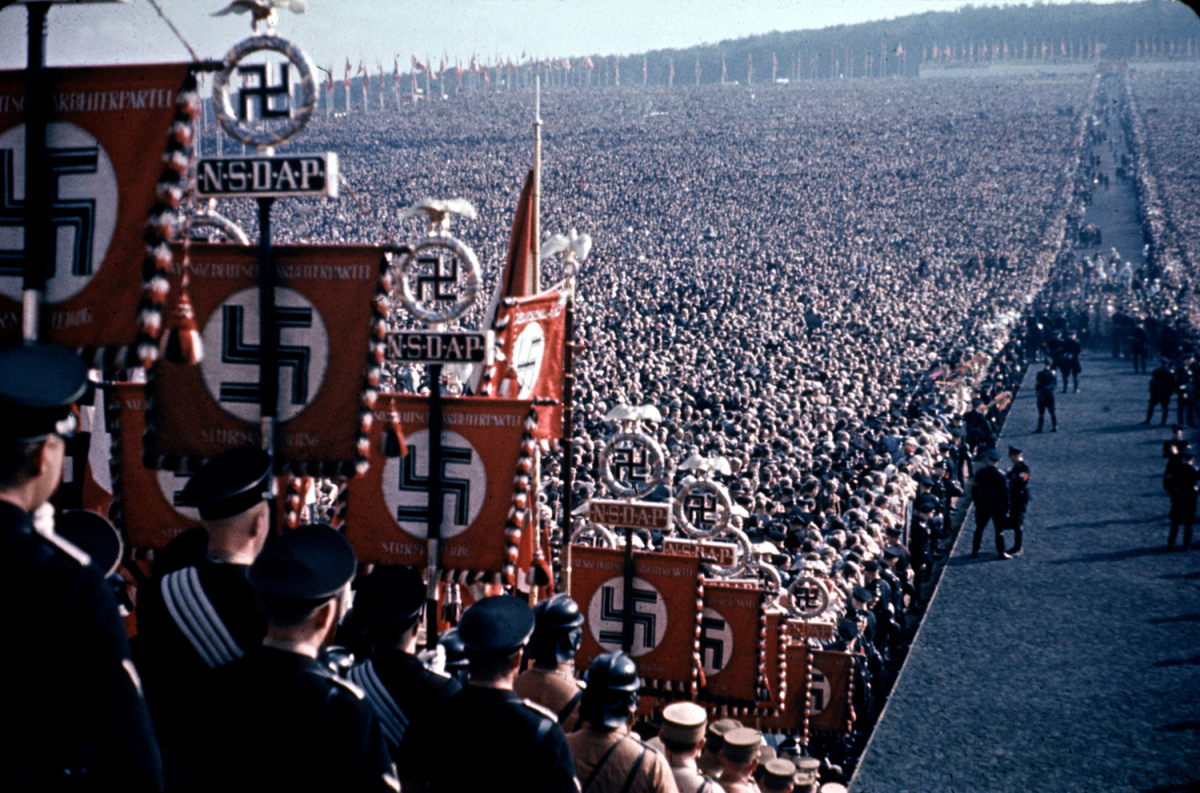
1937, Germany. A crowd of hundreds of thousands - “Street People” cheer Adolf Hitler during a march at a Thanksgiving Day 1937 harvest festival. Photo by Hugo Yeager, source: Livejournal
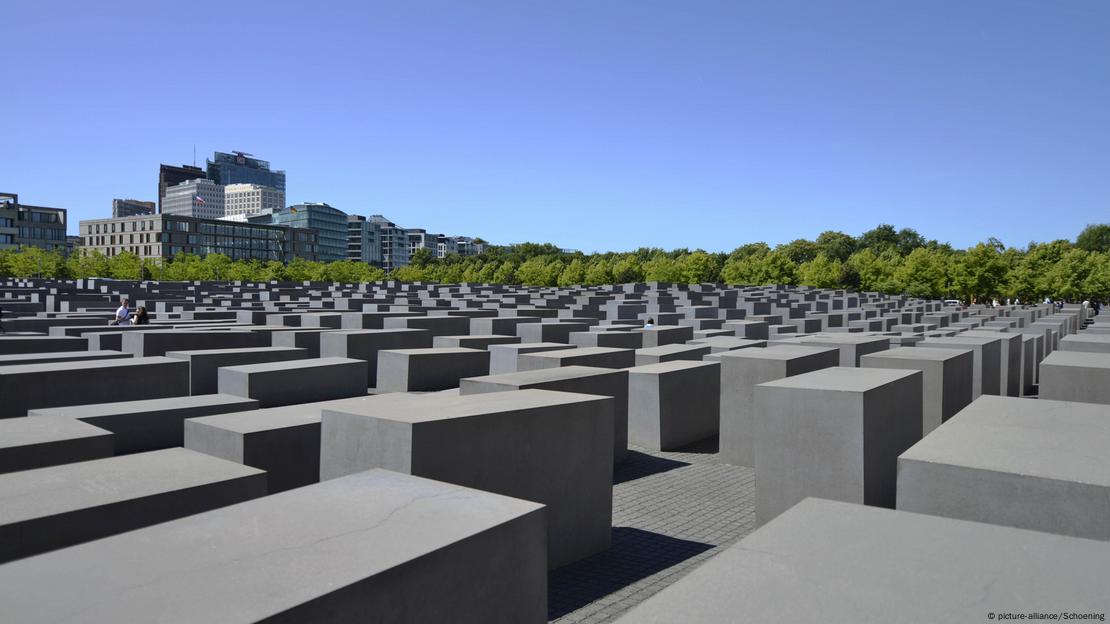
Memorial to the victims of the Holocaust in Berlin (National Socialists killed almost six million Jews between 1933 and 1945). Photo: picture-alliance/Schoening, source: DW

Putin and the crowd at the stadium at a rally in support of the invasion of Ukraine. Moscow, 18.03.2022 (3 weeks after the invasion). Photo: AFP - MIKHAIL KLIMENTYEV, source: RFI
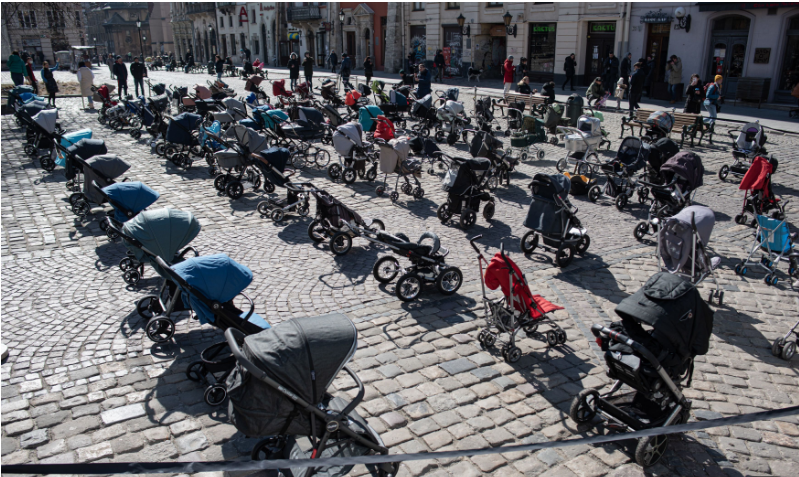
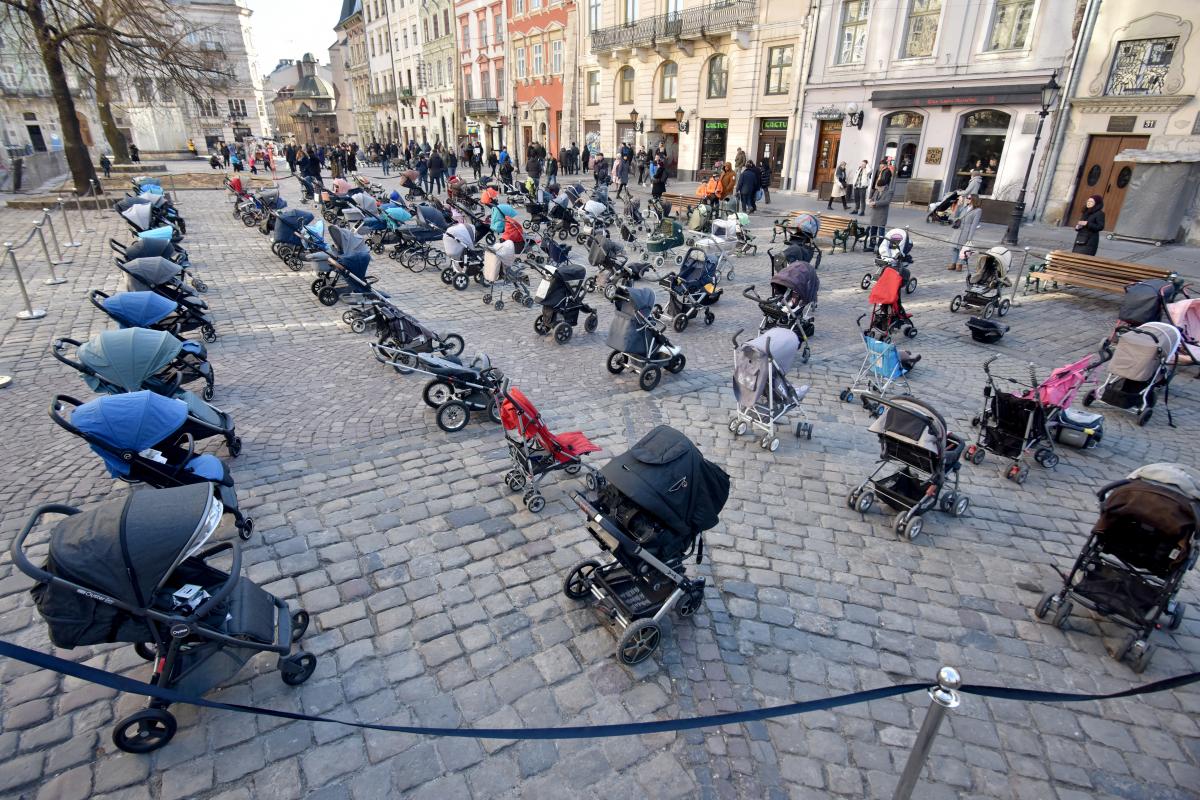
While Moscow was holding a rally in support of the Russian invasion of Ukraine (see previous photo), another event was taking place in Lviv: an exhibition of baby carriages based on the number of Ukrainian children killed by Russia at the time. Photo REUTERS, source: UNIAN
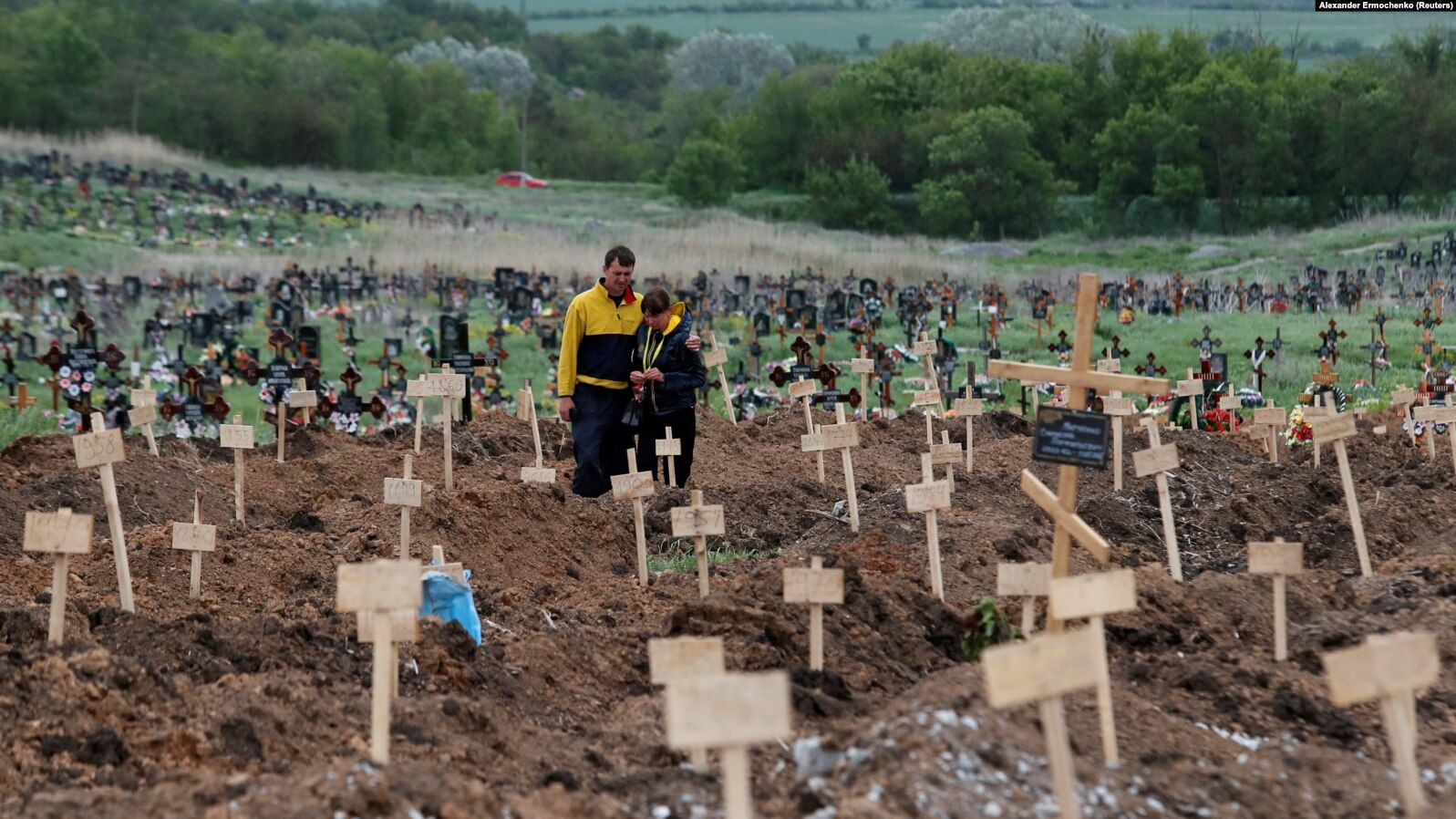
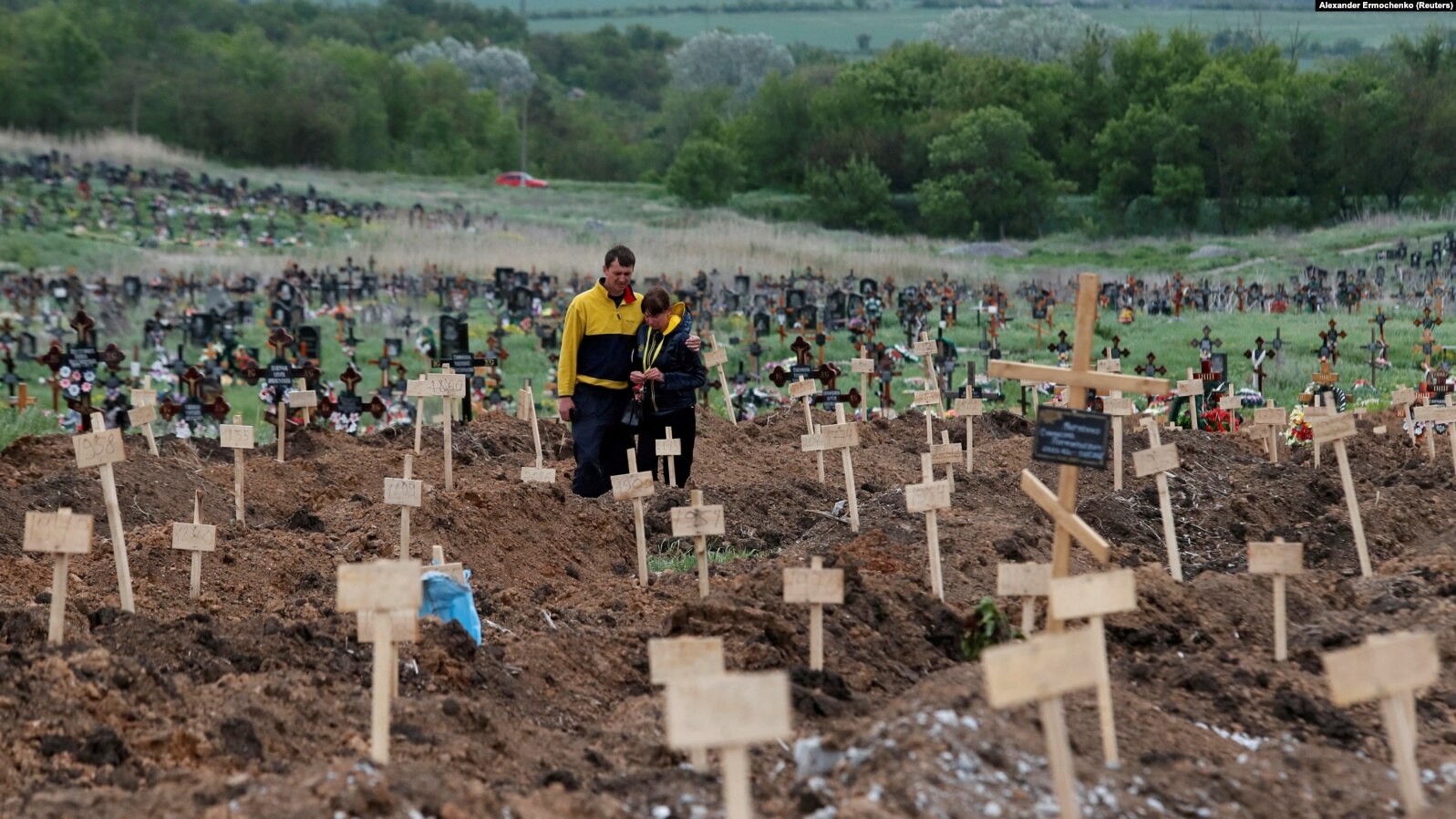
Cemetery with civilians killed in Mariupol due to the Russian invasion. Stary Krym settlement. May 2022. Photo: Olexander Yermochenko / Reuters / Forum, source: Current time
Cover photo: Emperor Qin's Terracotta Army, source: Pinterest

.png) Dear reader, We invite you to share your opinion about this post and the Trust but Verify project in general through available communication channels.
Dear reader, We invite you to share your opinion about this post and the Trust but Verify project in general through available communication channels.